One family. Two wars. Eighty years apart.
by Susannah Schild
Still Here is a memoir about one family — a mother, a soldier son, a ninety-seven-year-old grandfather who survived Auschwitz and eventually came home to Israel, and the land that runs through all of it.
It is a story of exile, return, motherhood, war, and the sacred geography of home. The book draws on extensive interviews with Papa, with other survivors, and on family testimonies preserved across three generations.
What follows on this page is some of the material the book is built from — the photographs, the people, the structure.
Our son Eitan was called up on the morning of October 7, 2023, and served in Gaza and Lebanon throughout the war that followed.
The book is about what it meant to live through it as a family — through daily life, holidays, missiles overhead, the soldiers who came home and the soldiers who didn't.
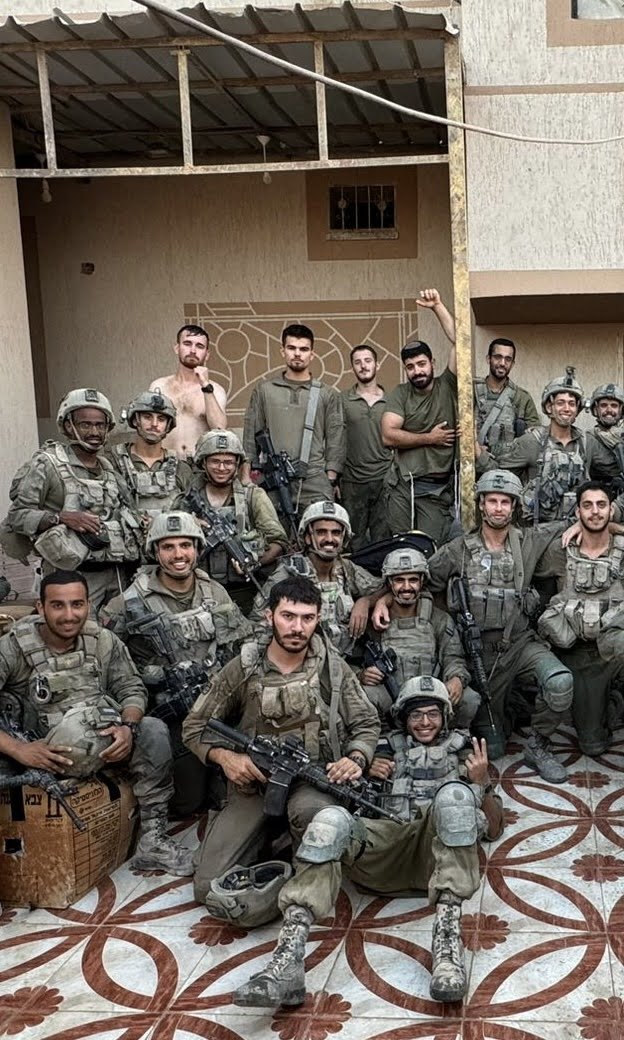

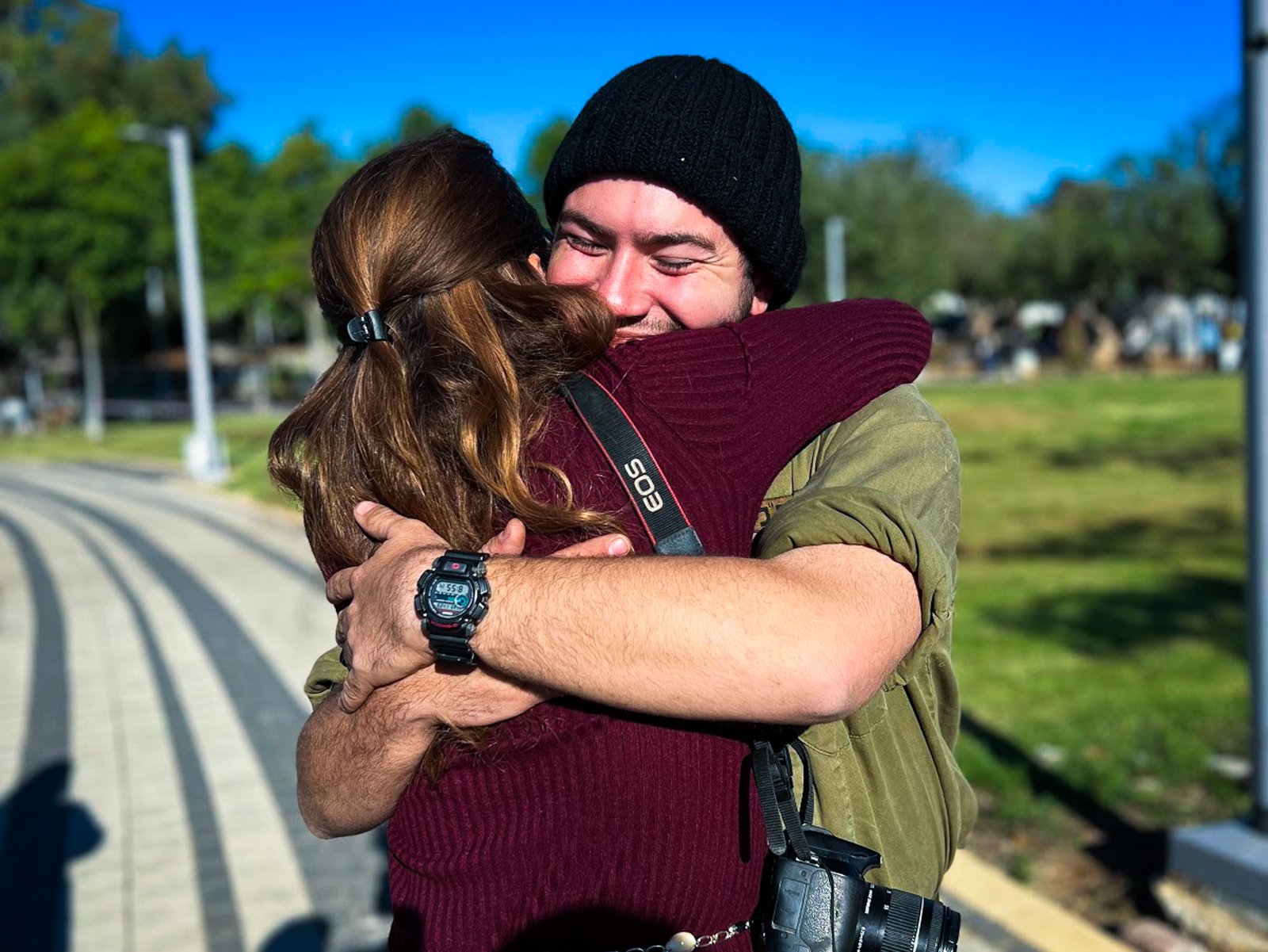
Still choosing this impossible, beautiful, heartbreaking life.
Another war. Same answer as always.
We're still here.
Gedalia "Jerry" Stein. Born 1929 in Majdan, Czechoslovakia. Survived Auschwitz, Buna, and the Dora-Mittelbau camp system. Moved to Jerusalem in September 2025 at the age of ninety-six.
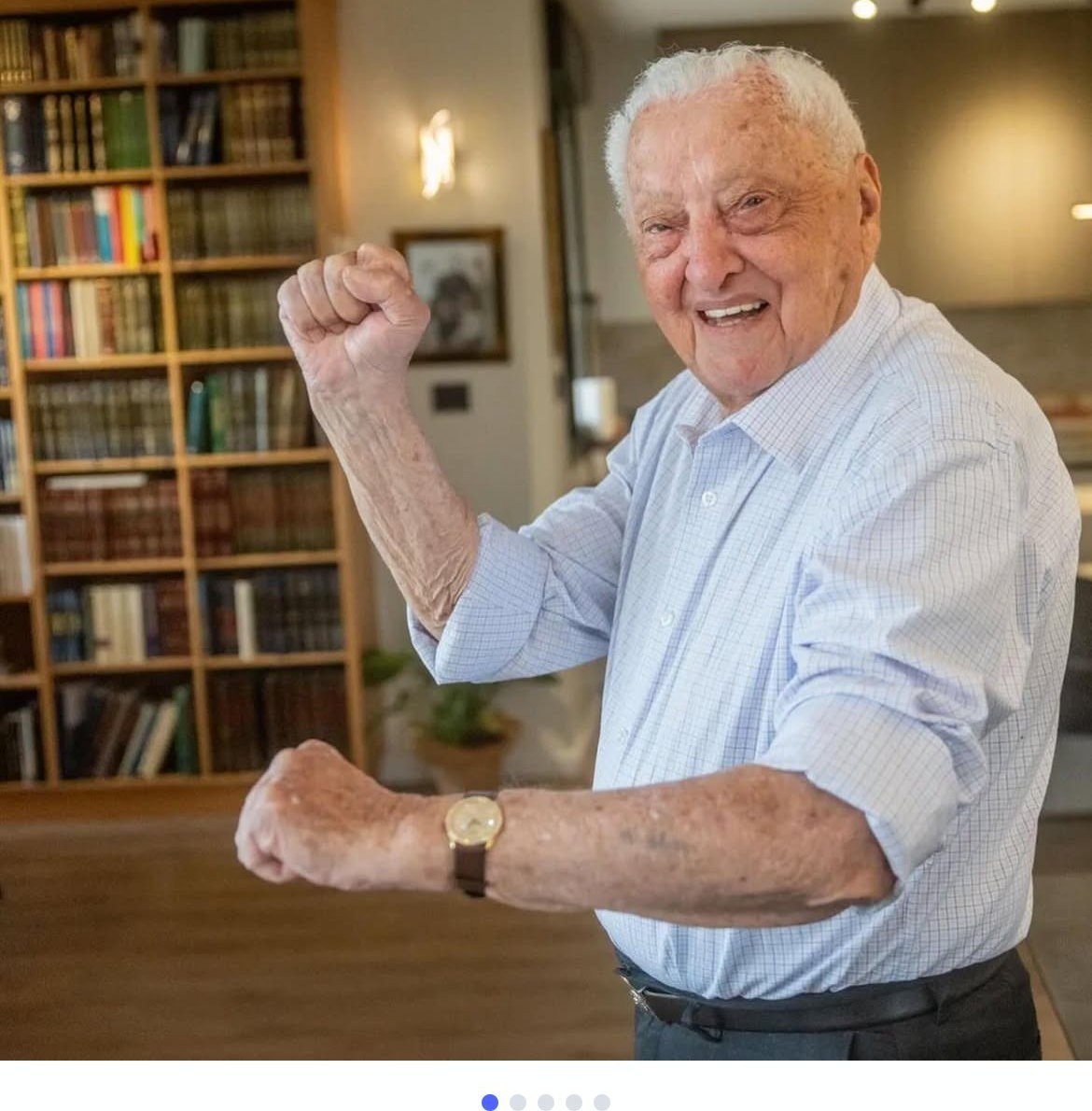
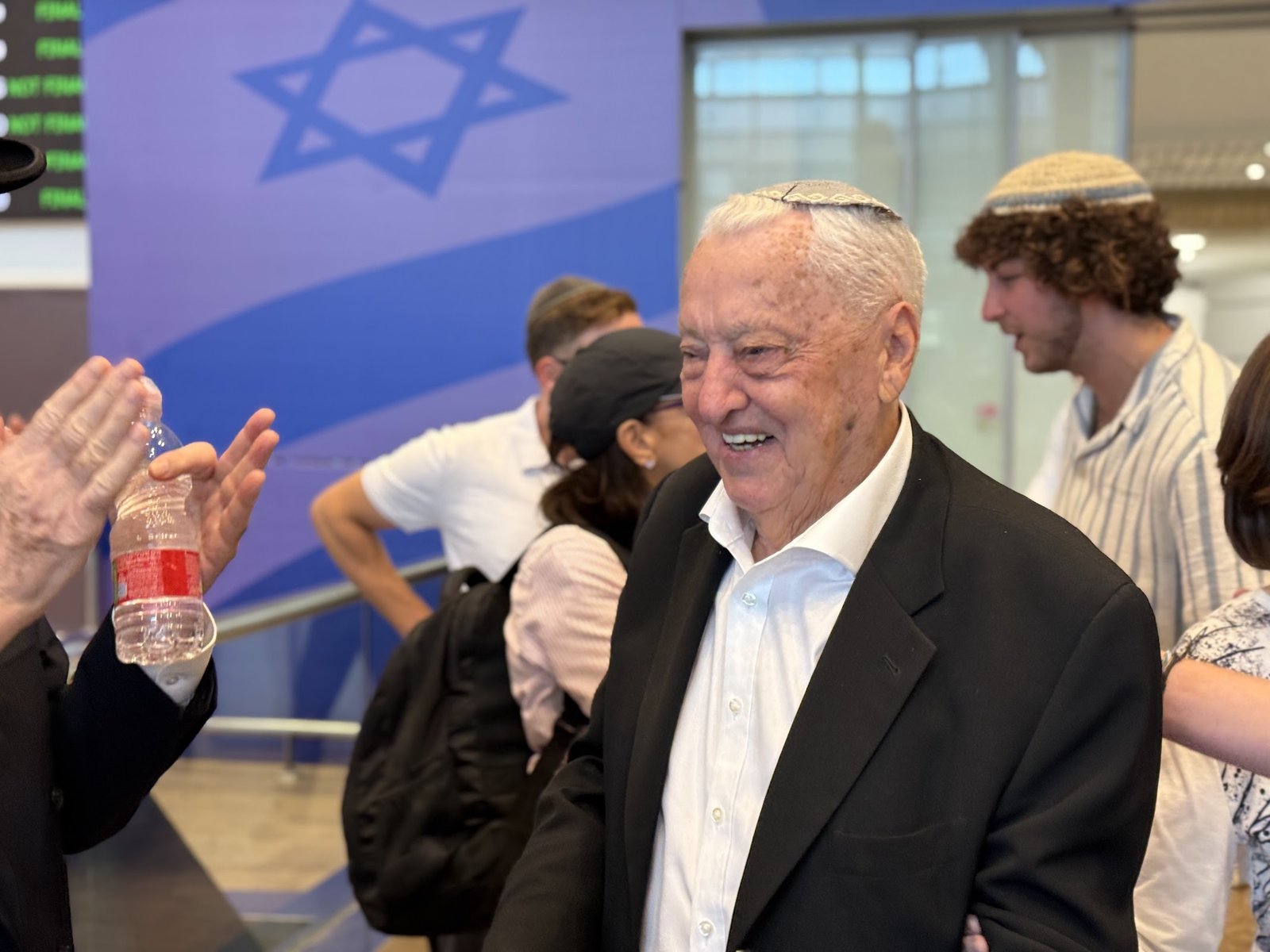
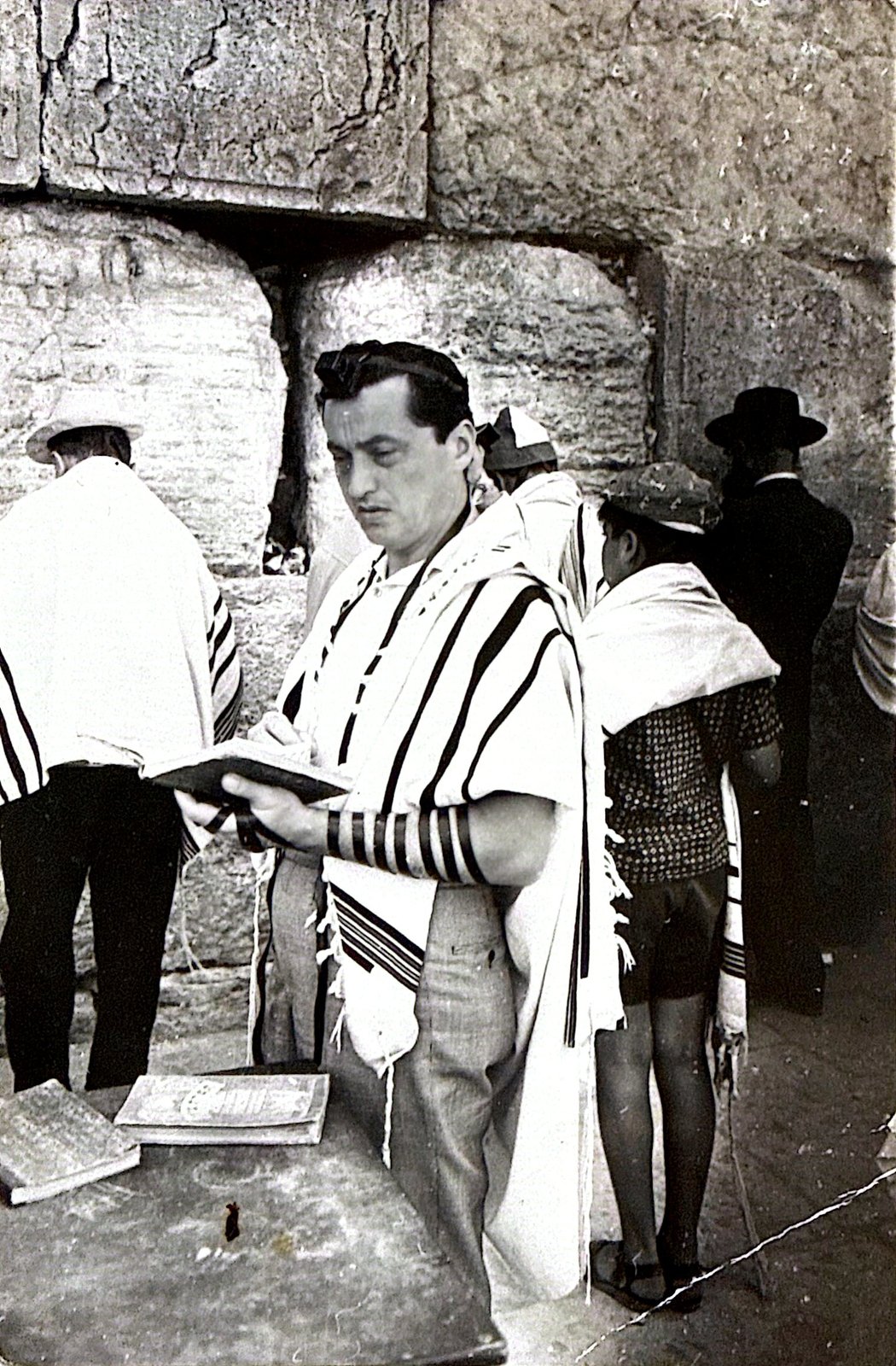
Papa was deported from Majdan in May 1944 at the age of fifteen. His mother and three of his siblings were sent to the gas chambers on arrival at Auschwitz. Papa was initially sent with them; not knowing quite why, he snuck to the other side, catching up with his older brother Hershi and his father in the line for the camp.
He was a bricklayer at Buna, working at the I.G. Farben factory at the same time as a boy named Elie Wiesel, who was one year older. His father disappeared during a later selection at Buna. Of his thirteen siblings, seven survived the war.
He survived the death march out of Auschwitz in the snow of January 1945, the train transport that followed — cattle cars packed beyond capacity, no food, no water — then another camp and one final death march. He was liberated in a forest near the Elbe River in April 1945, at the age of sixteen.
"Six hundred descendants. That is how I show that we won."
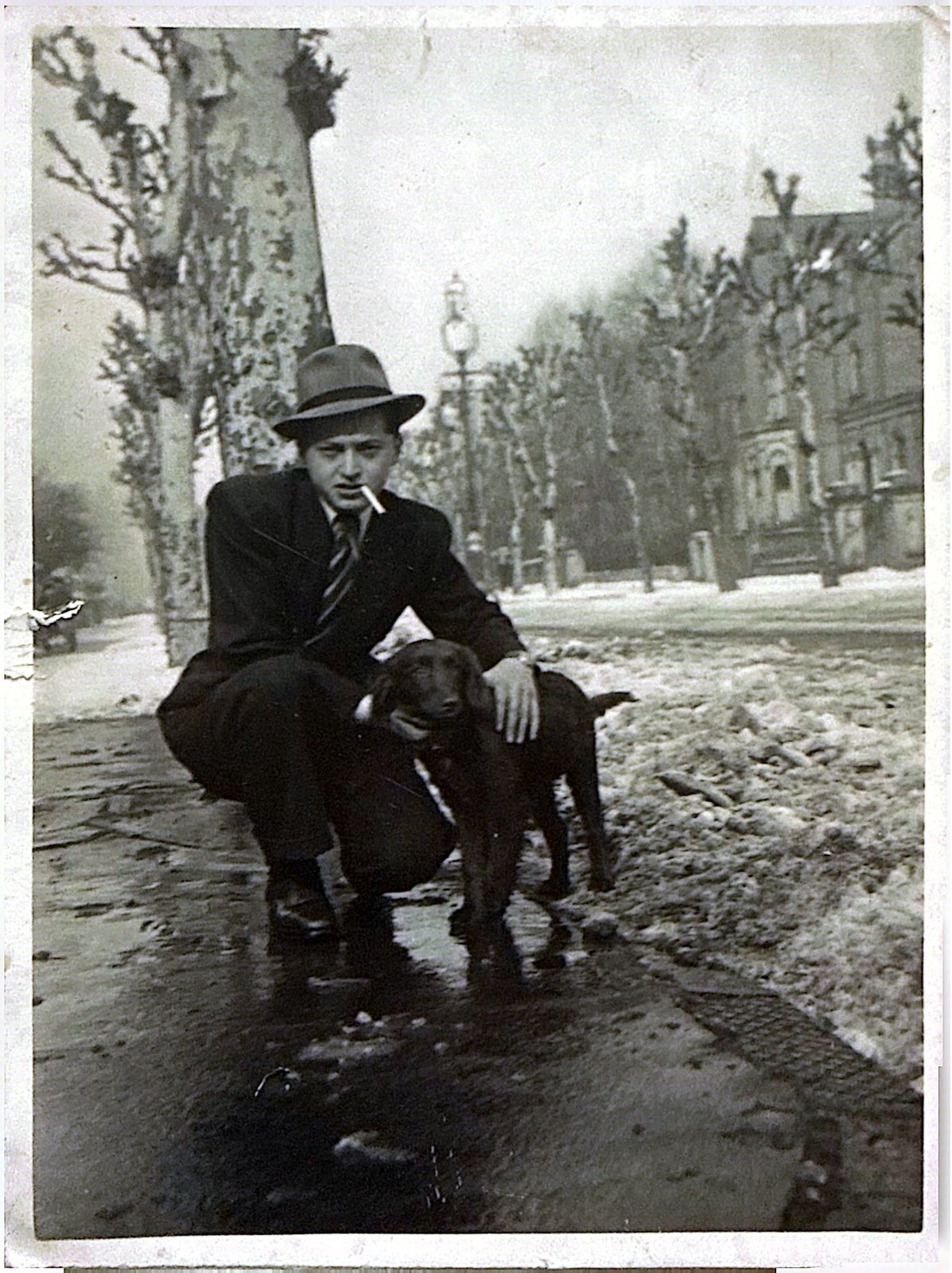
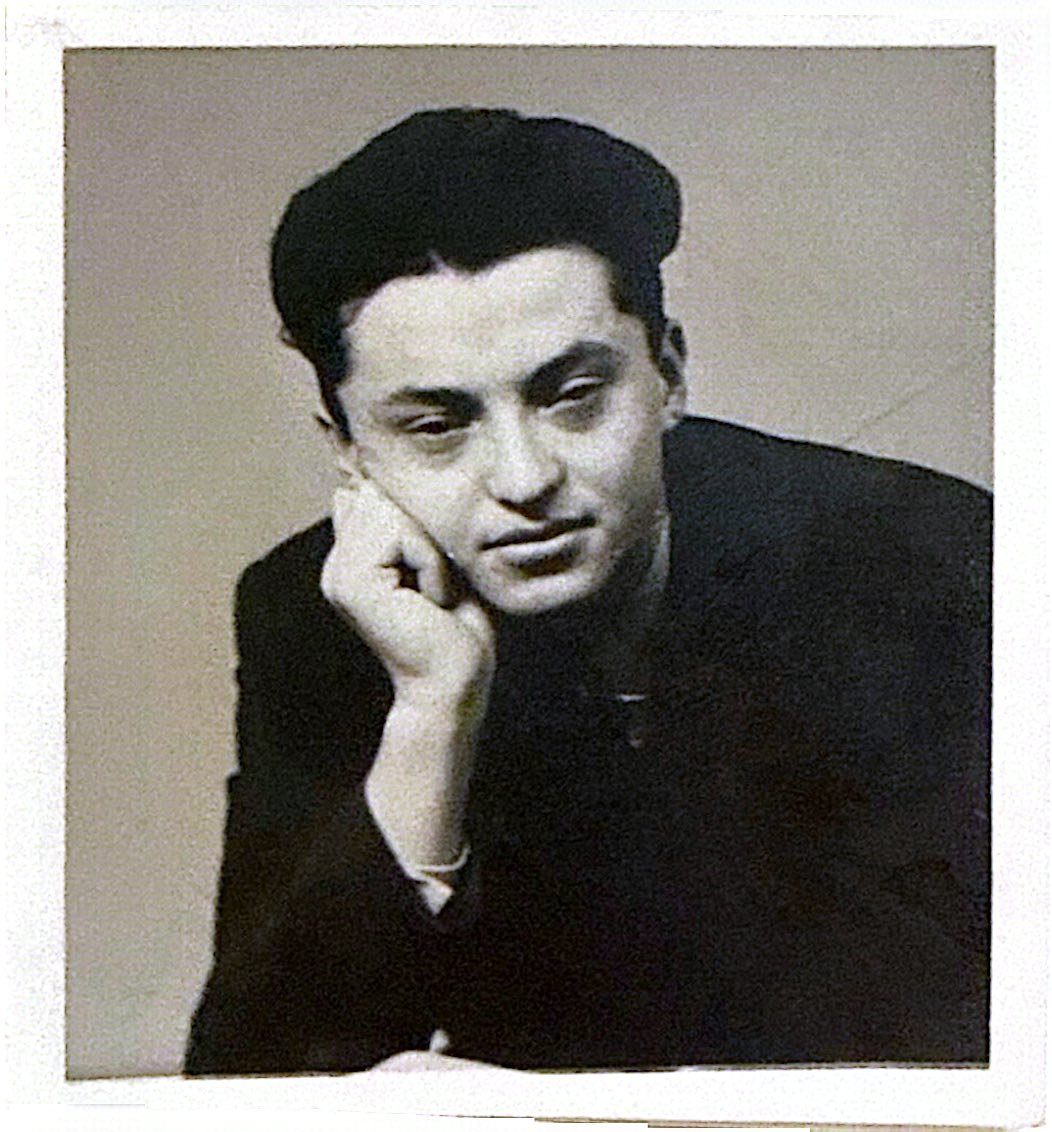
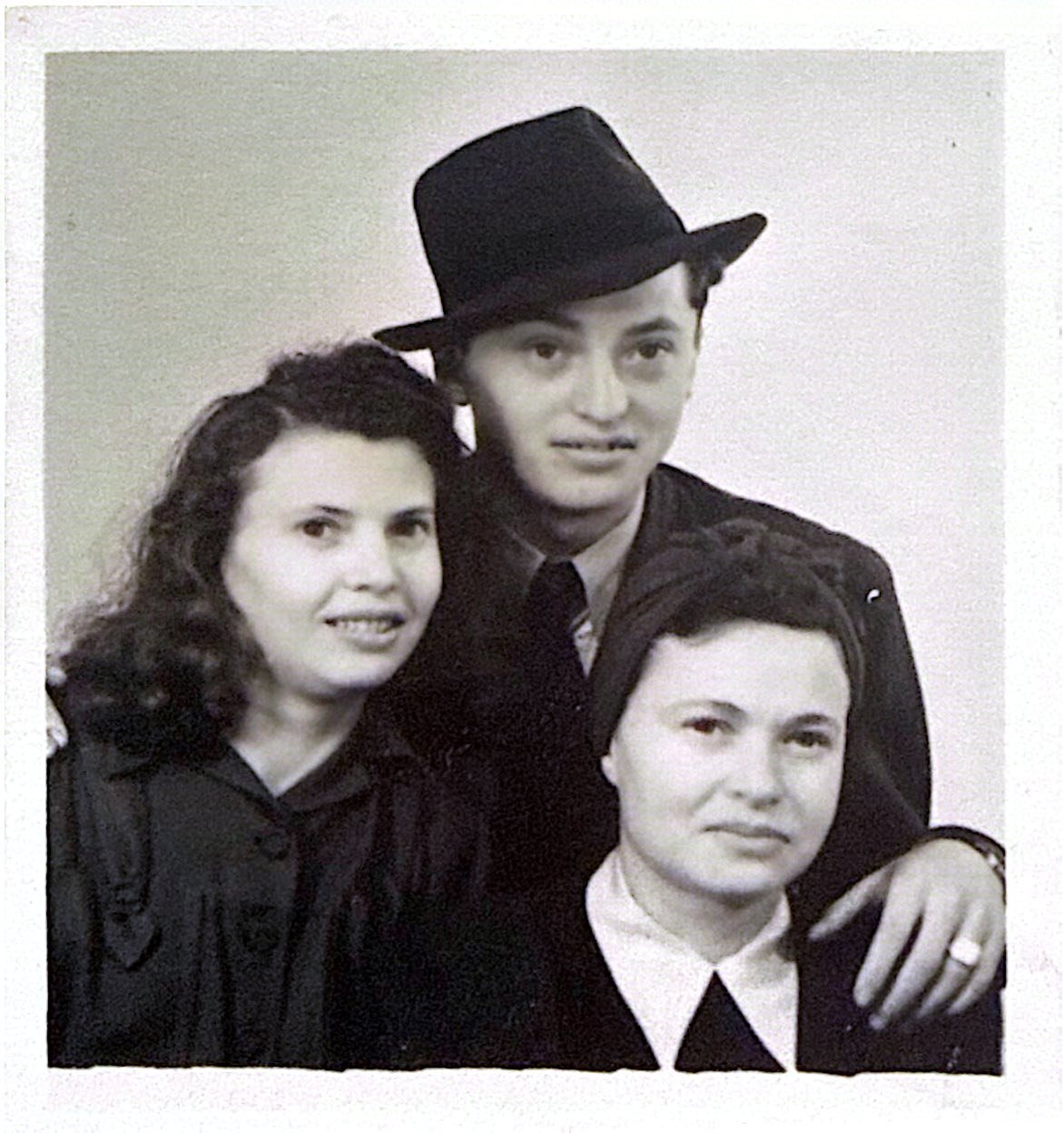
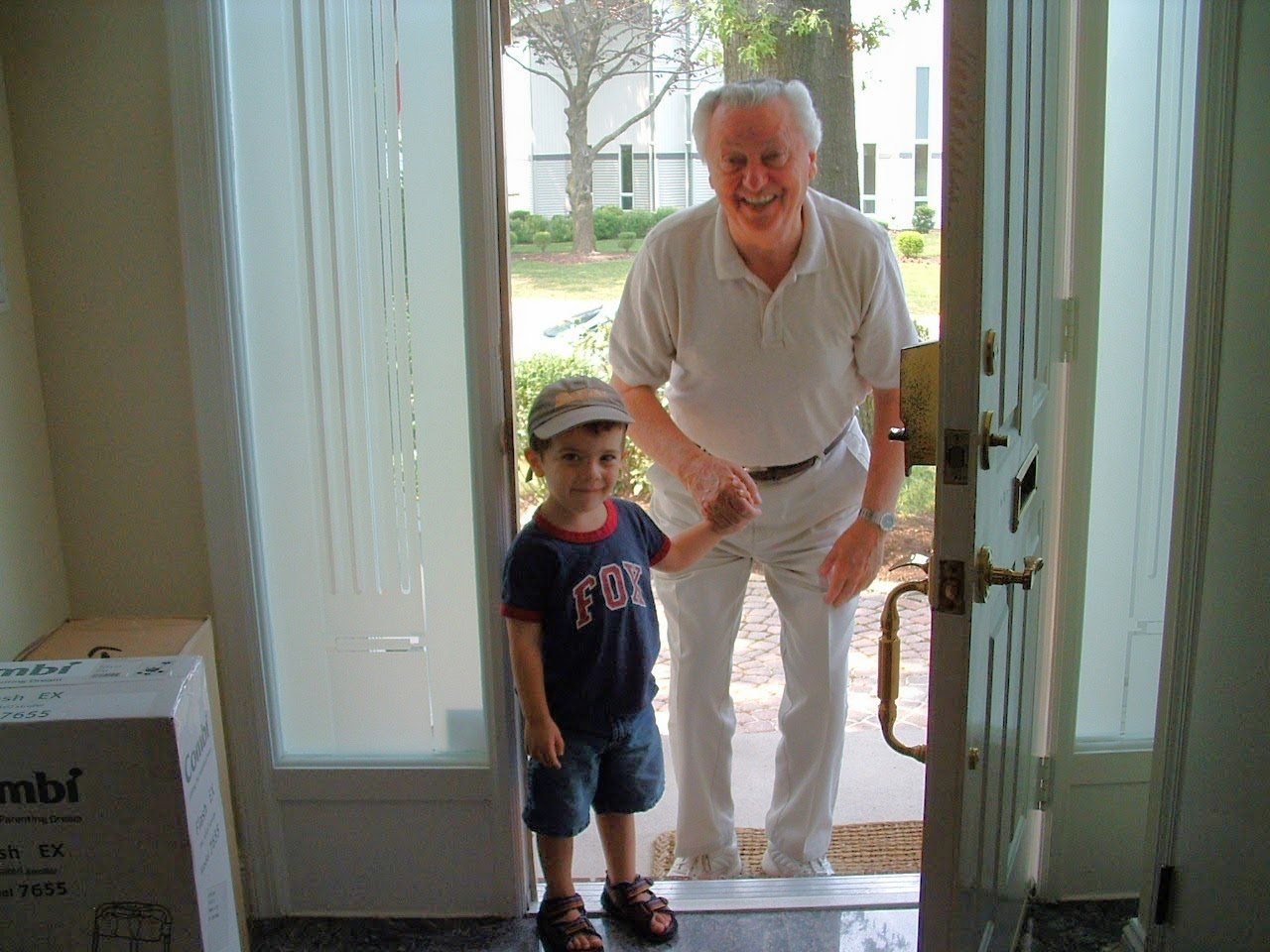
A grandfather survives Europe. A son goes to war in Israel. A mother tries to understand what history is asking of her.
The book lays Papa's story and ours side by side and lets the reader feel the inheritance for themselves. The two stories are placed close enough that the parallel emerges on its own.
Some families inherit silver. Some inherit stories. Some inherit the call to keep going.
The chapters alternate between Papa's story — pre-war Majdan, Auschwitz, liberation, the decades in America, the eventual move to Israel — and our family's experience of October 7 and the war that followed. The pairings are thematic. The structure lets the reader feel the inheritance for themselves.
Short selections that show the book's range. One scene from the present-day timeline, one from Papa's story, one from where they meet.
Neve Daniel, the morning after nine soldiers were killed in a Namer armored vehicle.
I open my eyes again.
It has been five days since Eitan entered the war zone. The Namer — the vehicle we'd all wished our sons were riding in instead. That's the one that was supposed to protect the nine soldiers that were killed yesterday. I lie in bed listening to birds singing outside the window and I cannot make myself get up.
I think about what Eitan said to me at Nehora before he went in: "Ima, just remember, the odds are with me. Even if soldiers die, the chance that it will be me is really, really small. Don't worry too much."
The probabilities make me feel a tiny bit better. But not much.
I get out of bed and dribble downstairs. Give Benzi and Gabi and Noa good morning hugs. Say morning prayers. Drink coffee. Prepare the kids' lunches, moving at a snail's pace: grilled cheese, flipping to one side, then the other. When that's done, I change into exercise clothes and go out to the yard.
The trees are still green, thick enough to give me privacy from the neighbors. Birds chirp in the branches — unbothered, oblivious, flitting about. I begin the day's workout: Upper Body Two. This set is always brutal, but at this moment it feels absolutely impossible.
Be strong, my inner voice says. You can do this.
Nine dips in, my arms feel like they are going to explode. Nine soldiers. I feel like I can't go on.
I close my eyes, searching for the inner strength to get through this metaphorical misery.
And then Eitan appears, in my mind's eye, running alongside me in my pain as he had in the morning's mental wanderings, sending forth his own strength. You can do this, Ima. Keep going.
Where is he in reality? Perhaps huddling in his Puma somewhere in Gaza, body aching, the dirt of days upon his skin, in so much discomfort. But if I know my son, he's also full of strength, commitment, and the will to fight until only the good guys are left standing.
Ten dips… eleven dips… twelve dips.
For my son, I can be strong. I can do this.
Buna, autumn 1944. The night after Papa realizes his father has been taken in a selection.
That night, Gedalia lay on his wooden plank and thought about the last time he'd really seen Father. Not just a glimpse at Appell, but an actual conversation. It had been three days ago. Father had looked tired — more tired than usual. His face drawn, his movements slower.
"You're keeping up?" Father had asked.
"I'm keeping up," Gedalia had said.
"Good. Keep going. Just keep going."
And Gedalia had turned away, back to his own formation, not knowing those would be the last words they'd exchange. Not knowing he should have said something more, something better than just "I'm keeping up."
He should have said: I love you.
He should have said: Thank you for everything.
He should have said: I'll remember you.
But he hadn't said any of that. Because he'd thought there would be more time.
Beside him on the plank, Hershi's breathing was steady, carefully controlled. Gedalia wondered if he was sleeping or just pretending. Wondered if he was thinking about Father too. About the family they'd lost piece by piece.
Three of them had arrived at Buna together in May. Father, Hershi, Gedalia.
Now there were two.
Gedalia closed his eyes and tried to remember Father's voice. The way he'd davened every morning, swaying slightly over his siddur. The way he'd said "We're going to Mashiach" in the cattle car, believing it with his whole heart.
He'd been wrong about that. There had been no Mashiach waiting at the end of that journey. Just gas chambers and crematoriums and selections that pulled people away without warning.
But Father had believed it.
Maybe that belief was its own kind of survival. Maybe that was what Father had been trying to teach them all along — not that they'd be rescued, but that they'd remain Jews even when everything else was stripped away.
Gedalia didn't know anymore.
All he knew was that tomorrow he'd wake up and Father wouldn't be there.
And he'd have to keep going anyway.
He and Hershi. The last two.
Just keep going.
Just stay alive.
Papa's Jerusalem apartment, autumn 2025. Papa is ninety-six. Gabi, his great-grandson, is thirteen — the same age Papa was when the Hungarian police arrested him on a bus and threw him in prison.
I come home from shul and they are sitting together on the two big armchairs by the window, Gabi and Papa, probably the two most similar people in the whole family.
Gabi, like Papa, likes things neat and orderly. We call him a "yekke" — that means a German in Yiddish. Meticulous. Everything in its place. Dirty dishes and haphazard cutlery are things that need to be rectified immediately. Like Papa, Gabi will start clearing the table before the meal is even finished, stacking plates with precision, wiping down surfaces that don't really need wiping.
They are sitting there together in Papa's Jerusalem apartment, feet up, both wearing shiny shoes — Papa in his black leather penny loafers, Gabi in his dark blue sneakers. White shirts tucked into blue pants. Legs crossed at the ankles in exactly the same way, leaning back in their chairs, just talking.
I stand in the doorway for a moment, watching them. Through the window before them, I can see the lights of Jerusalem coming on as Shabbat settles over the city.
As I get closer, I hear what they are talking about.
"They threw me into a dark cell," Papa is saying. "I was thirteen like you, on my way home from yeshiva. Just grabbed me off the bus and threw me in prison."
"I would cry," Gabi says.
Papa laughs — that gentle laugh he has, the one that somehow contains both sorrow and lightness. He reaches over and grabs Gabi's hand. "It wouldn't help!" he says with a smile.
For agents, editors, and journalists with questions about Still Here.
susannah@hikingintheholyland.com